
Have you ever noticed that the most captivating moments aren’t the loud, obvious ones, but the quiet, almost-hidden ones?
The hint of a smile, a conversation overheard from another room, a story left half-told.
This isn’t just a poetic notion; it’s a fundamental part of how our minds are wired.
And nowhere does this psychological truth play out more beautifully than in the timeless art of subtlety,
especially in how we present ourselves.
Think about it. On a sun-drenched beach, where skin is commonplace and on full display, the visual stimulus, however dramatic, is complete. There are no questions left to ask, no gaps for the imagination to fill. The brain registers it, files it away, and moves on. It’s an open book read in a single glance.
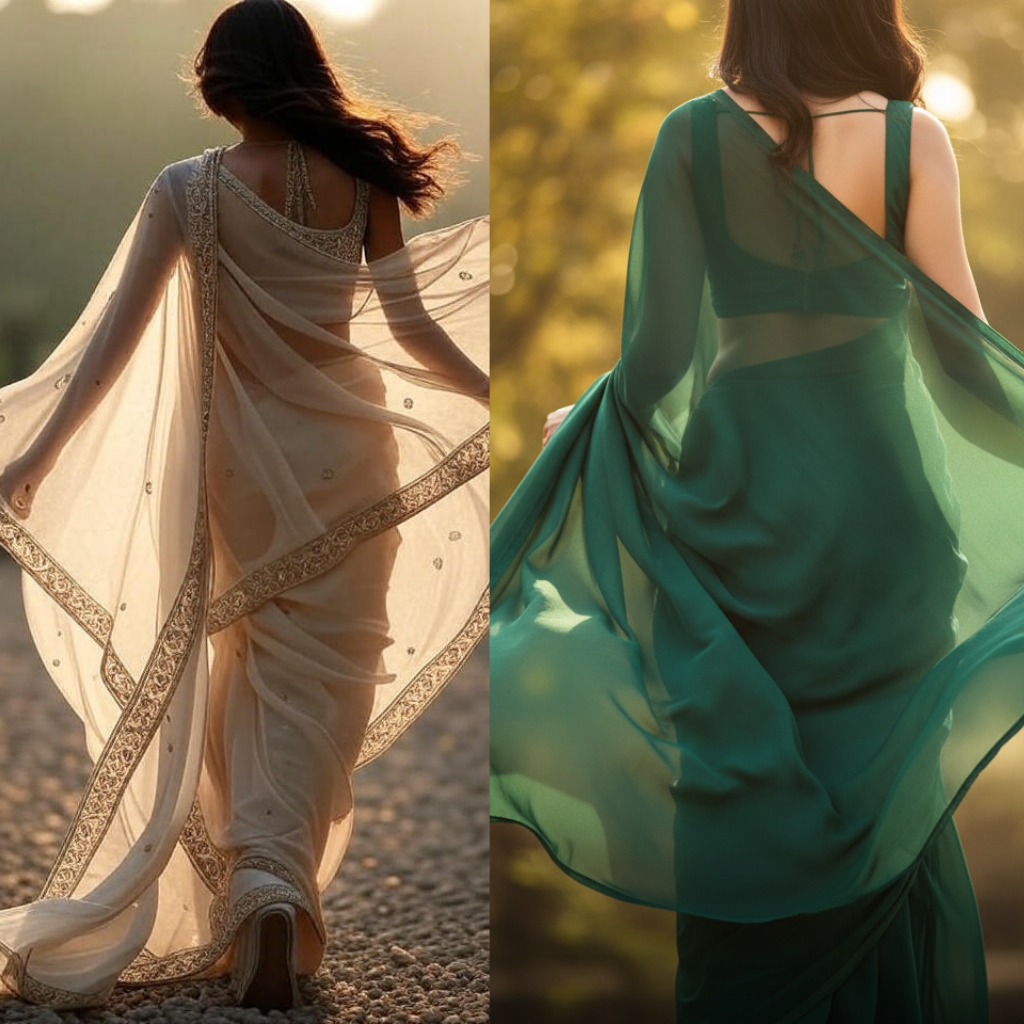
Now, picture a different scene. A woman walks by, draped in a flowing, elegant garment that hints at her form rather than outlining it. The fabric moves with her, revealing and concealing in a silent dance. Eyes are drawn, not because everything is shown, but precisely because it is not. The mind, presented with a beautiful mystery, instinctively leans in. It wants to complete the picture. It becomes an active participant in the moment.
This is the secret power of subtlety. It’s not about hiding; it’s about engaging.
The Psychology of the “Tease”: Your Brain on Intrigue
Why does this happen? It boils down to two key psychological principles:
- The Zeigarnik Effect: Our brains have a tendency to remember uncompleted or interrupted tasks better than completed ones. An unfinished story nags at us. A partially revealed form invites the mind to “finish” the visual story, making the experience more memorable and personally engaging.
- The Dopamine Loop: Mystery and anticipation trigger the release of dopamine, the neurotransmitter associated with pleasure and reward. The “chase” for the full picture, the unraveling of the layers, is neurologically more rewarding than the instant gratification of having it all presented at once. The subtle approach literally makes the experience more pleasurable for the observer’s brain.

In a world of informational and sensory overexposure, where everything from news to entertainment is served in rapid-fire, easily digestible clips, subtlety is a form of quiet rebellion. It refuses to shout. It demands a pause, a second look, a moment of thought.
Real-Life Glimpses: Where Theory Meets the Pavement
The Wedding Guest: I remember a friend at a wedding, torn between a stunning, form-fitting gown and a traditional, gracefully draped saree. She chose the gown first and received many compliments. Later, she changed into the saree. The reaction was different. It wasn’t just about “looking nice.” People circled around her, not just with compliments, but with questions. “How is this draped?” “The way the pallu falls is so beautiful.” The conversation shifted from passive observation to active engagement. The gown stated a fact; the saree started a conversation.
The Contrast of Cultures: You don’t need to travel far to see this principle in action. Consider the quiet confidence of a woman in a well-tailored trench coat, the belt tied just so, versus someone in overtly revealing club wear. One creates an aura of intrigue and self-possession; the other offers all the answers upfront. It’s the difference between a whispered secret and a headline. Both have their place, but the whisper is what draws you closer.
The Bigger Picture: It’s Not About the Clothes
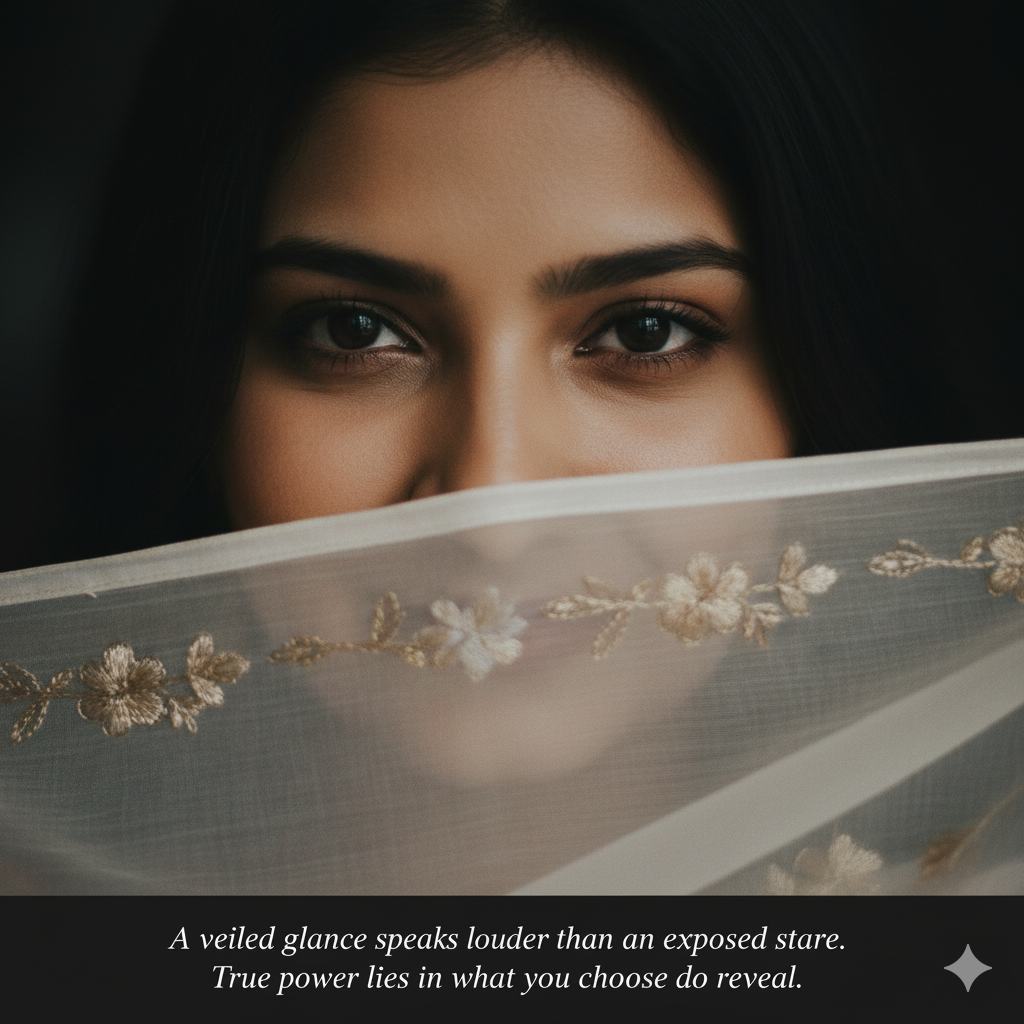
This isn’t really about a specific garment versus another. It’s a metaphor for a more profound way of moving through life. We live in an age of personal oversharing, of curated highlight reels that leave little to the imagination. We often feel pressured to present a finished, polished, and completely “exposed” version of ourselves to be seen and validated.
But what if we embraced a little more subtlety?
What if we held a little back? Not out of secrecy, but to allow for discovery. What if we communicated in a way that invited people to lean in and listen closely, rather than broadcasting on all channels? This applies to our style, our conversations, and even our social media presence.
The most enduring allure comes from a sense of depth, from the suggestion that there is more to discover beneath the surface. It’s a universal language of elegance that says, “The story is still being written, and you’re invited to wonder what happens next.”
So, the next time you get ready for your day, or share a piece of yourself with the world, ask yourself: are you giving away the entire plot, or are you writing a story worth getting lost in?
What’s one small way you can incorporate a little more beautiful mystery into your life today?
Isn’t this just promoting modesty over self-expression?
Not at all. The article isn’t about judging one style as “right” or “wrong.” It’s about the psychological impact of different approaches. The core idea is that subtlety and mystery are powerful tools for engagement, regardless of what you’re wearing. It’s less about covering up and more about understanding that leaving something to the imagination can make a presentation more captivating and memorable. True self-expression can be just as powerful when it’s nuanced as when it’s bold and direct.
What is the actual psychological reason my brain finds subtlety more intriguing?
It primarily comes down to two key mechanisms:
The Dopamine Loop: Your brain finds the “chase” or the process of discovery rewarding. When something is partially revealed, it creates anticipation, which triggers the release of dopamine—a neurotransmitter associated with pleasure and reward. The subtle reveal is neurologically more engaging than a single, complete piece of information.
The Zeigarnik Effect: This is a psychological principle that states people remember uncompleted or interrupted tasks better than completed ones. When your brain encounters a “beautiful mystery,” it feels compelled to complete the picture, making you an active participant and cementing the memory more firmly.
Can this principle be applied beyond fashion and clothing?
Absolutely. This is a universal principle of engagement. You can apply it to:
Conversation: Hinting at an interesting story rather than blurting out the punchline first.
Social Media: Posting a captivating detail that makes people want to learn more, rather than oversharing every part of your day.
Professional Presentations: Starting with a compelling question or an intriguing data point to draw your audience in, rather than listing all your conclusions on the first slide.
In all these cases, you’re creating intrigue and making the other person an active participant in the experience.
In the beach example, are you saying people on the beach aren’t attractive?
No, that’s not the point. The article acknowledges that people on the beach can be visually stunning. The contrast is used to highlight a different kind of reaction. On the beach, the look is often “normalized” within that context, so it may not command the same kind of lingering, curious attention. The power of subtlety lies in its ability to break the pattern and create a unique, brain-tickling moment of intrigue that stands out from its surroundings.
How can I incorporate more subtlety into my life without changing my entire wardrobe?
Start small and think in terms of “mystery” rather than “modesty.”
In Style: Try adding one element that creates a sense of flow or partial concealment, like a sheer scarf, a long jacket, or a piece of statement jewelry that draws the eye on a journey.
In Demeanor: Practice speaking a little more softly, which can make people lean in to listen. Or, offer a warm, knowing smile instead of a lengthy explanation.
In Sharing: Next time you have a great story, try telling it in a way that builds anticipation rather than giving away the ending immediately.
It’s about cultivating an aura of discovery, one small, intentional choice at a time.
